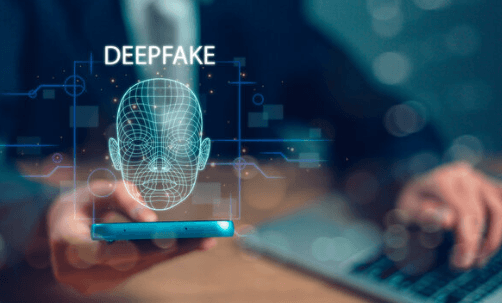

In 2026, we find ourselves at a critical crossroads in the history of digital media. The rapid democratization of generative artificial intelligence has fundamentally altered our relationship with visual and auditory information. While AI has unlocked unprecedented creative potential allowing for the seamless restoration of historical footage and the creation of immersive virtual worlds it has simultaneously introduced a profound challenge to the concept of objective reality. The rise of “deepfakes” (AI-generated synthetic media that can mimic a person’s appearance and voice with startling accuracy) has made the phrase “seeing is believing” obsolete.
As these synthetic creations become indistinguishable from authentic recordings, the integrity of democratic processes, the security of financial systems, and the reputations of individuals are all at risk. In this high-stakes environment, the emergence of a sophisticated deepfake detection tool has become more than just a technical convenience; it is a vital pillar of digital safety. To understand why these tools are essential, we must first explore the complex mechanisms behind AI authenticity and the ongoing technological arms race between those who create synthetic media and those who seek to verify it.
The Anatomy of a Deepfake: How Synthetic Media is Crafted
To appreciate the complexity of detection, one must first understand how deepfakes are produced. Most modern deepfakes are powered by Generative Adversarial Networks (GANs). A GAN consists of two neural networks: the generator, which creates the synthetic image, and the discriminator, which attempts to identify if the image is fake. These two networks “compete” against each other millions of times.
The generator learns to create increasingly convincing fakes to fool the discriminator, while the discriminator becomes more adept at spotting flaws. By 2026, these networks have evolved to include transformer-based architectures that understand the nuances of lighting, skin texture, and micro-expressions better than ever before.
Beyond GANs, Diffusion Models, the same technology behind popular AI art generators—are now being used to create high-fidelity video content. These models can generate realistic movement and depth, making the resulting deepfakes incredibly difficult to spot with the naked eye. This technological leap has shifted the burden of proof from human observation to algorithmic verification.
Why AI Authenticity Matters in 2026
The implications of unverified AI content are vast. In the corporate world, “vishing” (voice phishing) attacks using AI-cloned voices have led to unauthorized transfers of millions of dollars. In the political sphere, synthetic videos can be deployed to spread misinformation or discredit candidates just hours before an election, leaving no time for traditional fact-checking.
Furthermore, the “liar’s dividend” has become a prevalent issue; this is a phenomenon where individuals can dismiss authentic evidence of their wrongdoing by simply claiming it is a deepfake. Without robust detection mechanisms, the very foundation of trust in digital communication begins to crumble.
The Mechanics of Detection: How Verification Tools Work
Modern detection systems do not rely on a single check; they use a multi-layered approach to verify authenticity. Here are the primary methods utilized by top-tier verification platforms:
| Detection Method | How It Works | What It Spots |
|---|---|---|
| Biological Signal Analysis | Checks for natural human traits. | Irregular blinking, pulse-related skin color changes. |
| Artifact Detection | Searches for mathematical inconsistencies. | Blurry edges, inconsistent lighting, warping. |
| Metadata & Provenance | Analyzes the file’s digital history. | Missing camera signatures, unexpected edit trails. |
| Audio-Visual Cross-Check | Matches lip movement with sound waves. | Micro-delays between speech and mouth movement. |
Phoneme-Viseme Mismatches
One of the most effective ways to spot a deepfake is by analyzing the synchronization between sound (phonemes) and the shape of the mouth (visemes). While AI can generate a perfect voice, matching the subtle muscular movements of the jaw and lips during complex speech is notoriously difficult. Sophisticated detection tools scan for these micro-mismatches that are invisible to humans but mathematically glaring to a neural network.
The Role of Blockchain in Provenance
In 2026, we are seeing the integration of blockchain technology with media creation. Professional cameras and smartphones are now beginning to “sign” photos and videos at the moment of capture with a unique cryptographic hash. This record is stored on a decentralized ledger. When a video is uploaded to the internet, a detection tool can verify its “provenance” essentially checking if the file has been altered since the moment it was recorded. If the hash doesn’t match, the content is flagged as modified or synthetic.
Best Practices for Navigating Synthetic Media
While algorithmic tools are our best defense, a culture of digital literacy is also required. Users should practice the “SIFT” method (Stop, Investigate the source, Find better coverage, Trace claims back to the original context). Combining human skepticism with AI-powered verification creates a robust shield against deception.
See also: The Sound of Deception: Mastering AI Voice Detection in the Synthetic Era
Frequently Asked Questions (FAQs)
Can deepfakes be 100% detected?
While no tool can claim absolute perfection as AI evolves, modern detection systems can identify the vast majority of synthetic media by analyzing patterns that are impossible for current generative models to replicate perfectly.
Is a deepfake detection tool only for government use?
No. In 2026, these tools are widely available for social media platforms, news organizations, and even individual users who want to verify the authenticity of a suspicious video or audio clip.
Does compressed video (like on WhatsApp) make detection harder?
Yes, compression can hide some of the digital “artifacts” detectors look for. However, advanced tools are trained specifically on compressed data to maintain high accuracy even on low-quality files.
Why is AI authenticity important for the average person?
It protects individuals from identity theft, financial fraud, and the emotional distress caused by non-consensual synthetic imagery. Verification ensures that our personal and professional communications remain trustworthy.
Conclusion: The Future of Authenticity
The arms race between AI creators and AI detectors will likely continue indefinitely. However, the goal is not to eliminate synthetic media entirely as it has many positive uses in entertainment and medicine but to ensure that we can distinguish between the real and the manufactured. By utilizing advanced detection technology and fostering a critical mindset, we can preserve the integrity of our digital world and ensure that truth remains a tangible asset in the age of AI.